
Imagine learning to read in a language that is not your own, where the words on the page feel foreign before you even begin. For many children in the Comoros, this has long been the reality. The STEPS Comoros Education Transformation Project is working to change that, one letter tile at a time. This work is supported by the Global Partnership for Education Knowledge and Innovation Exchange, a joint endeavor with the International Development Research Centre, Canada
One Country, Three Islands, Three Different Dialects
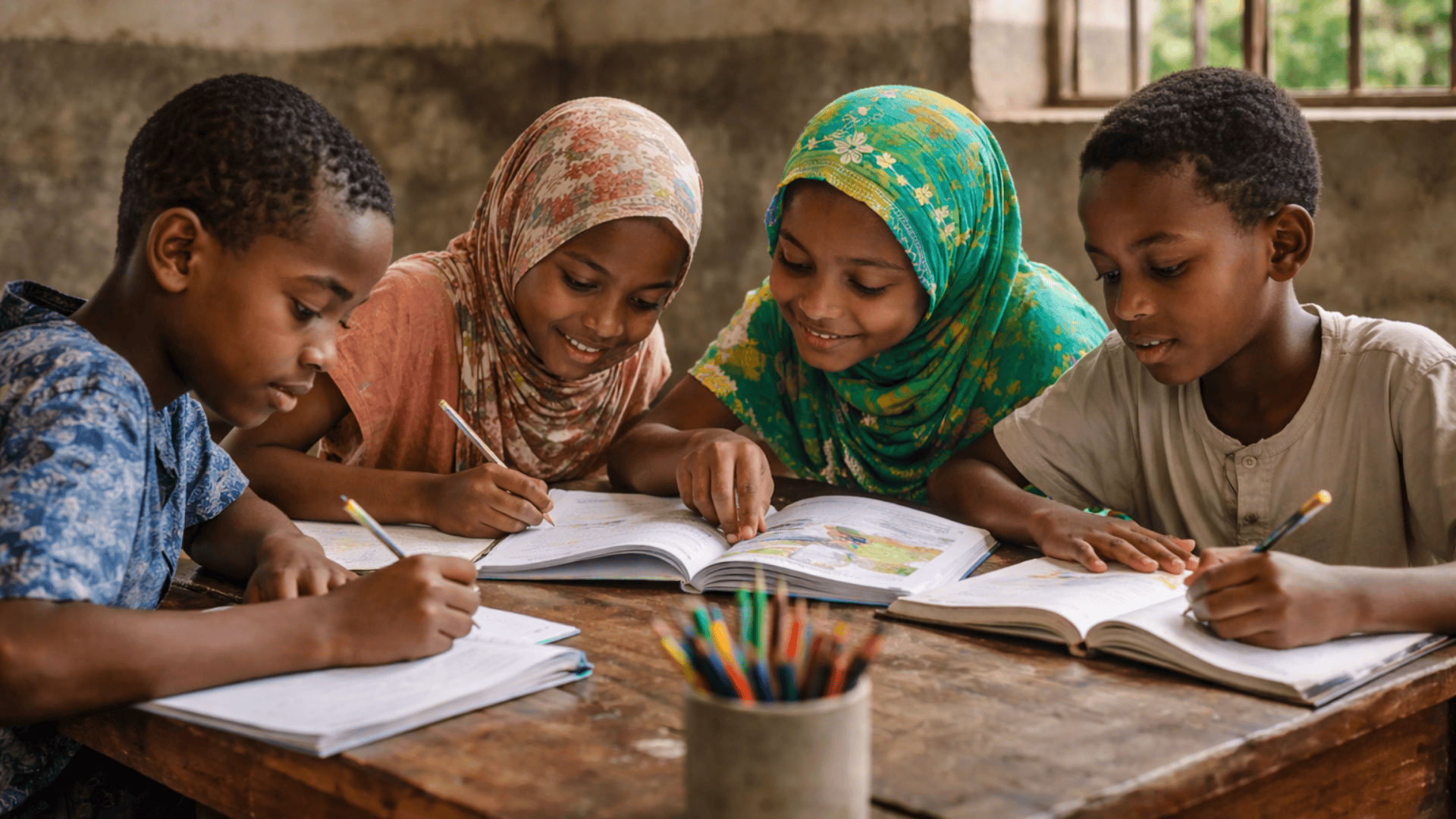
The Union of Comoros is an island nation in the Indian Ocean, home to three main islands (Grande Comore, Anjouan, and Mohéli), each with its own distinct variety of Shikomori, the language spoken by the vast majority of Comorians. Despite being the mother tongue of most children in the country (1), Shikomori has historically had little presence in formal education (2), which is conducted primarily in French. Research consistently shows that children learn best when they first develop literacy in their mother tongue (3). The absence of Shikomori-language learning tools is not just a cultural gap; it is an educational one with real consequences for every child who sits down in a classroom and is asked to read and write in a language they do not yet speak.
Enter Alpha Tiles
As part of the STEPS Comoros project, our team is partnering with SIL Global, an international language development organization with decades of experience supporting endangered and minority languages, to build an Alpha Tiles app in Shikomori. Alpha Tiles is an Android-based literacy game that helps learners recognize letters, sounds, and words through interactive, game-based activities. It is completely free to use and, critically, designed to function offline, making it accessible to children in areas with limited or no internet connectivity.
Follow along as we share updates from the islands, including progress on the app, voices from our partners, and stories from the communities at the heart of this project.
References
- World Atlas. “What Languages Are Spoken in the Comoros?” WorldAtlas.com. Accessed April 2026. https://www.worldatlas.com/articles/what-languages-are-spoken-in-comoros.html
- Chamanga, Mohamed Ahmed. “ShiKomori, the Bantu Language of the Comoros: Status and Perspectives.” In Handbook of Language Policy and Education in Countries of the Southern African Development Community (SADC). Brill, 2022.
- Global Partnership for Education. “Children Learn Better in Their Mother Tongue.” February 2014. https://www.globalpartnership.org/blog/children-learn-better-their-mother-tongue