
Last December, two things happened in the same week that, taken together, felt like a milestone for our mission.
Our CEO, Miriam Chickering, represented NextGenU.org at Amazon’s annual re:Invent conference in Las Vegas as part of the Now Go Build CTO Fellowship. And separately, Amazon CTO, Werner Vogels, included NextGenU.org’s AI-powered textbook project in his annual technology predictions, a widely read forecast of where technology is heading and why it matters.
For a nonprofit that started by asking why children in sub-Saharan Africa couldn’t access quality science materials, the convergence was striking. For the team, it was a reminder that the distance between a classroom without electricity and global recognition is measured not in miles, but in design decisions.
The Problem That Got Us Here
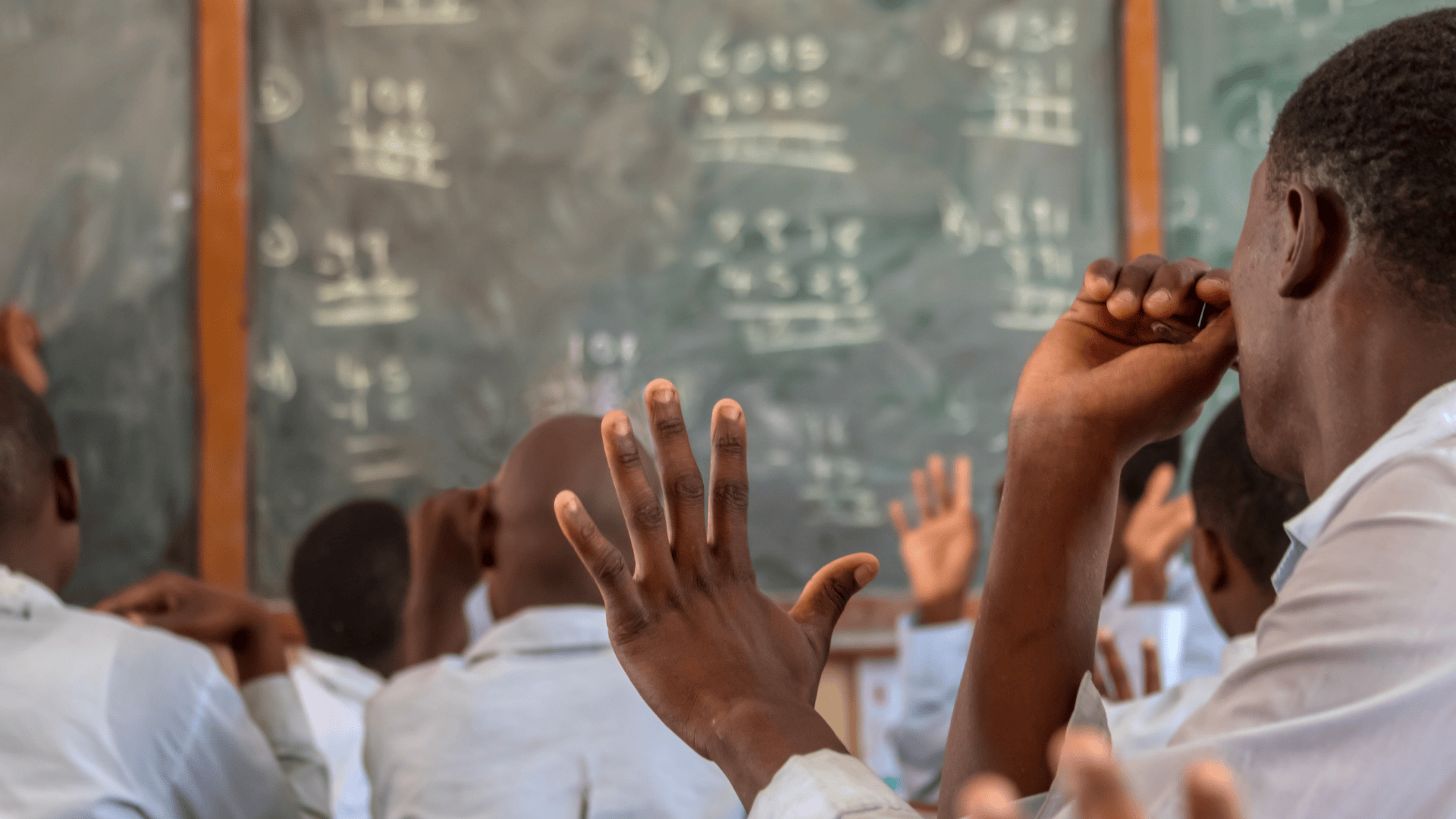
The STEPS project (STEM Teacher/Student Education for Primary Schools) started with a straightforward observation: across the 18 schools we worked with in three African countries, students lacked quality textbooks, teachers lacked training, and the science materials that did exist were often poorly aligned with what each country’s curriculum actually required.
In Benin, most teachers had no science textbooks at all. In Cameroon, the English-language textbooks were of such poor quality that students in class three were still counting one by one. In the DRC, conflict disrupted even basic school operations.
The team produced 52 curriculum resources tailored to national standards, trained 160 teachers, and reached over 6,000 students. Teacher confidence in new pedagogical approaches reached 94% by project end. The Benin Ministry of Education initiated formal authorisation of the science materials. The Cameroon Baptist Convention committed to system-wide adoption.
But here’s what caught the attention of Amazon’s CTO: the numbers. Twelve lessons grew to over 600 in 18 months, at roughly one hundredth of traditional cost, deployed across three countries with different languages, different curricula, and different regulatory environments.
What AI Actually Does in This Work
The AI story here is not the one people expect. Nobody handed a prompt to a chatbot and received a textbook. What happened is more intriguing and more human.
The team built a system where AI handles the heavy translation and adaptation work, converting curriculum materials across languages, adjusting content to meet specific national standards, generating structured lesson plans and worksheets, while human experts review every output for accuracy, cultural relevance, and alignment with what each country’s ministry actually requires.
The philosophy behind this matters. As our CEO puts it: “We aren’t in an AI loop. We invite AI technology tools into our human loops.” It’s a distinction that sounds subtle but changes everything about how you build. When AI is in charge and humans check its work, you get efficiency. When humans are in charge and AI extends their capacity, you get something institutions can actually trust.
Vogels, whose foundational work in distributed systems taught the technology world that you cannot build reliable infrastructure by assuming ideal conditions, recognised a parallel. The insight underneath the STEPS project is the same one that drives good systems engineering: production constraints must shape the architecture. You don’t build for ideal classrooms with reliable internet, trained teachers, and ample budgets. You build for the classrooms that actually exist, the ones with one laptop, one projector, intermittent electricity, and a teacher who has never seen a structured lesson plan before.
The Fellowship
The Now Go Build CTO Fellowship cohort included founders working across health, education, climate, and disaster response, among them Brendan Michaelsen (Our Wave), Jay Patel (Jacaranda Health), and Maryam Bello (Parkers Mobile Clinic).
The conversations across the week kept returning to the same theme: AI and cloud tools are only as powerful as the human judgment and empathy guiding them. The takeaway from leaders at both Amazon and Anthropic was that consistent technology must serve people, not the other way around.
Or as the team at NextGenU.org frames it: AI for the human, not the human for AI.
What Comes Next
The AI-powered textbook project, originally launched through STEPS with early support from the International Development Research Centre (IDRC) and the Global Partnership for Education (GPE-KIX), is now scaling beyond its pilot countries. The goal is deceptively simple: make it possible for any ministry of education to generate implementation-ready curriculum materials, complete textbooks, teacher guides, student workbooks, and assessments, adapted to their national standards, in their languages, at a fraction of traditional cost and time.
The keyword there is “implementation-ready.” Not drafts. Not raw content. Complete packages that a teacher with minimal training can pick up and use on Monday morning.
Having this work featured in Vogels’ predictions is a testament to what becomes possible when powerful tools are placed in the hands of those doing meaningful work. The technology matters. But it only matters because it serves something larger.
We are grateful for the partnerships that have brought us to this stage, from IDRC and GPE-KIX to Amazon’s ongoing support through credits and the CTO Fellowship, and we look forward to ensuring these tools remain global, equitable, and human-centred.
Explore More:
- Watch Dr. Vogels’ historic keynote: YouTube Keynote
- Read Dr. Vogels’ reflections and meet the CTO Fellows: All Things Distributed
- See the top announcements from re:Invent: AWS Blog
- Connect with Miriam on LinkedIn: Miriam Chickering
NextGenU.org is a nonprofit organisation providing free, accredited health and STEM education globally. The STEPS project continues as a permanent initiative of NextGenU.org. Learn more at nextgenu.org.